
There are days when I feel like I have it all together. The calendar is color-coded. The work gets done. The kids get where they need to go. Dinner somehow appears on the table. Nobody has forgotten an appointment. Nobody is actively on fire.
Then there are the other days. Some days, a teenager needs to have a life-changing conversation fifteen minutes before an important Zoom meeting starts. Other days, work is overwhelming and the laundry is winning. And occasionally, life decides that whatever challenge you’re currently carrying isn’t quite enough and sends another one along for good measure.z If I’m honest, the last few years have contained more of those days than I expected.
I’m a single mom of two teenagers. I work in veterinary medicine, a profession that already demands a tremendous amount of the people who choose it. I’m divorced and co-parenting in a mostly healthy, but no less stressful, ex-partnership. I’m part of a polyamorous family structure. I love and support bonus kids in my life who are members of the LGBTQ+ community, including transgender youth. Like many people, I’ve spent a lot of time trying to figure out how to hold all of those responsibilities at once. And I’ve come to an uncomfortable realization: I don’t think work-life balance is the goal. At least not for me.
The Myth of Work-Life Balance
For years, I treated balance as though it was a destination. I thought that if I just found the right system, the right planner, the right routine, or the right schedule, everything would click into place. I thought I could somehow organize the competing demands of parenting, leadership, relationships, finances, caregiving, and daily life into a neat and sustainable rhythm. That has not been my experience. Most days, parenting feels less like balance and more like adaptation. Every day involves hundreds of decisions made with incomplete information. Often, you’re responding to situations you couldn’t have anticipated. At the same time, you’re trying to meet the needs of the people you love while also showing up for the people who depend on you professionally.
And when your children become teenagers, the questions become bigger than what time soccer practice starts or whether homework is finished. How do you help your children build confidence in a world that profits from insecurity? How do you teach resilience without teaching them to tolerate harm? How do you help them navigate identity, belonging, relationships, and safety when many of us are still figuring those things out ourselves? How do you teach them to show up in a world that doesn’t always make space for them?
For parents raising LGBTQ+ children, or children who are questioning who they are, those questions can carry additional weight. Families often navigate more complex conversations. The stakes can feel more immediate. The current political and social climate has added layers of concern that many families are navigating in real time. The emotional labor doesn’t stay at home when we leave for work. It comes with us into exam rooms, hospital treatment areas, leadership meetings, conference calls, and late-night email sessions.
What Actually Keeps Us Going?
Despite all of that, when I look back on the seasons that have challenged me the most, what stands out is not how resilient I was. What stands out is who showed up. As queer people, many of us grow up hearing the phrase chosen family. Over time, I’ve come to believe it is one of the most important gifts our community has to offer.
Chosen family is the friend who answers the phone when you’re falling apart. Sometimes it’s the partner who steps in when you’re overwhelmed. Other times it’s the person who picks up your kid when you get stuck at the clinic with that emergency that walked in at 4:59 p.m.Maybe it’s the friend who Instacarts groceries because they know you haven’t made it to the store and your teenagers have been assembling lunches from whatever is left in the pantry. Often, it’s the people who listen without judgment, sit with you through difficult moments, and keep showing up even when life gets messy. The older I get, the more convinced I become that none of us were ever meant to do this alone. Not parenting. Not relationships. Not careers. Not grief. Not joy. Not life.
The Veterinary Medicine Version of Chosen Family
I’ve seen this truth reflected repeatedly throughout veterinary medicine. Over the years, I’ve watched coworkers become aunties and funcles to one another’s children. I’ve watched teammates swap shifts so someone could make it to a school event. Time and again, colleagues have quietly carried one another through divorces, illnesses, financial struggles, losses, and personal crises. Veterinary medicine can be an incredibly demanding profession. We spend a lot of time talking about burnout, wellbeing, staffing shortages, and retention. Those conversations matter.
But I sometimes wonder if we spend enough time talking about belonging. Because when I think about what has actually kept me afloat through some of the hardest chapters of my life, it wasn’t grit. It wasn’t independence. It wasn’t having the perfect plan. It was community. It was knowing that there were people willing to help carry the weight when my arms got tired.
Visibility Matters. Belonging Saves Lives.
As Pride Month continues, I’ve found myself thinking about that more than ever. We often talk about community as though it’s a nice thing to have. A bonus. A social benefit. For many of us, especially those in the LGBTQ+ community, community is much more than that. Community becomes infrastructure. It provides support. It builds resilience. Sometimes, it is survival. And sometimes it is the difference between drowning and staying afloat.
Visibility matters. Being seen matters. But belonging is what helps people stay. Belonging is what helps people stay. It tells someone they don’t have to navigate the hard parts alone. More importantly, it’s knowing there is a seat for you at the table, a person who will answer the phone, and a community that will show up when life gets heavy.
You Don’t Have to Carry It Alone
If you’re a parent feeling overwhelmed, exhausted, worried, stretched thin, or uncertain, I hope you’ll remember this:
You do not have to have all the answers.
You do not have to carry everything by yourself.
And you do not have to navigate the hard parts alone.
Sometimes the strongest thing we can do is let other people help us swim. In my experience, those people are often the ones who become family, regardless of whether we share DNA. They’re the people who choose us. And who keep choosing us, every single day. 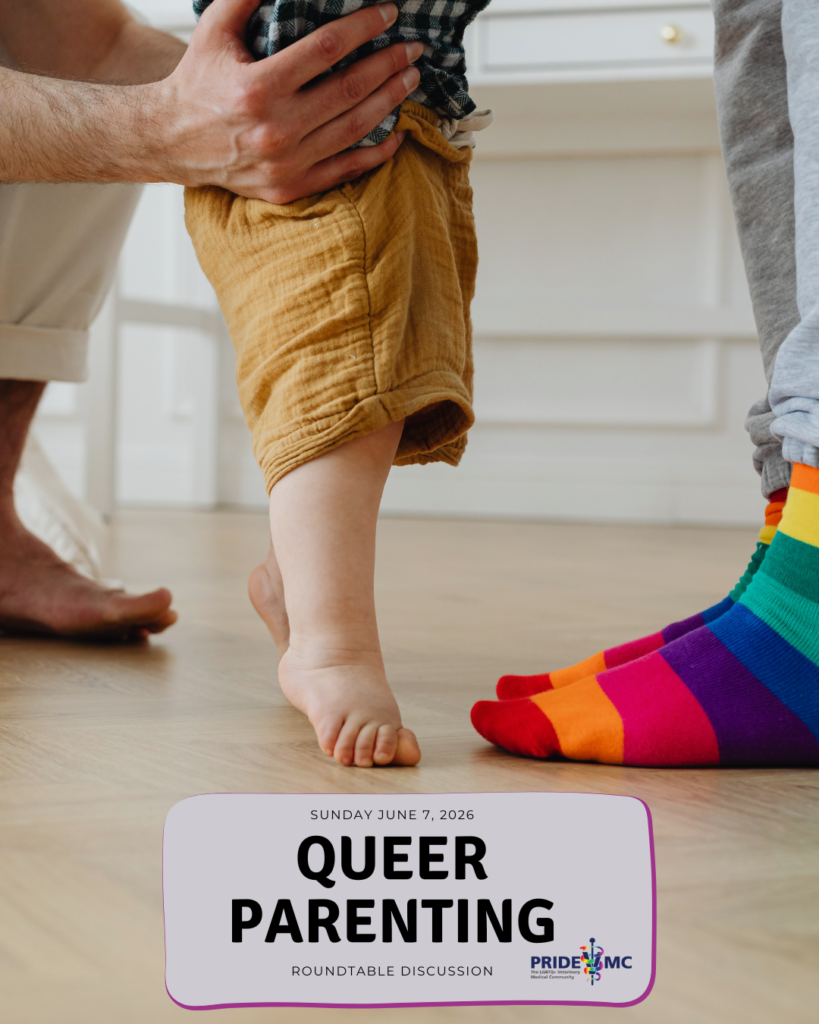
Join the Conversation
These reflections are deeply connected to why PrideVMC creates spaces for conversations like our Queer Parenting Discussion. Parenting is complicated. Parenting while navigating identity, belonging, safety, advocacy, and an ever-changing world can feel even more so. Many of us are carrying questions that don’t have easy answers, and one of the greatest gifts of community is realizing we don’t have to navigate them alone. During this discussion, we’ll explore the realities of parenting, chosen family, raising LGBTQ+ youth, supporting one another through uncertainty, and finding joy and connection along the way.
Whether you’re a queer parent, parenting LGBTQ+ children, supporting LGBTQ+ youth, considering parenthood, or simply committed to raising humans who move through the world with compassion and curiosity, you’re welcome. I’ll be joined by Ginger Templeton and members of the PrideVMC community for what I know will be an honest, thoughtful, and meaningful conversation. Register here for zoom link info
I’d love to see you there. ❤️🧡💛💚💙💜🖤🤎🩶🩵🤍🩷
PrideVMC believes that community changes lives. Throughout Pride Month, we’re creating spaces for LGBTQ+ veterinary professionals, students, allies, families, and supporters to connect, learn, and belong. Visit our events calendar to see what’s coming up and join us in building a better world for the LGBTQ+ community in veterinary medicine. Blog content written by: Stephanie Goss